

October 7, 2026
Choosing the right cooking oil is an important part of everyday cooking. With so many options available, it can be difficult to understand the difference between cold pressed oils and refined oils.
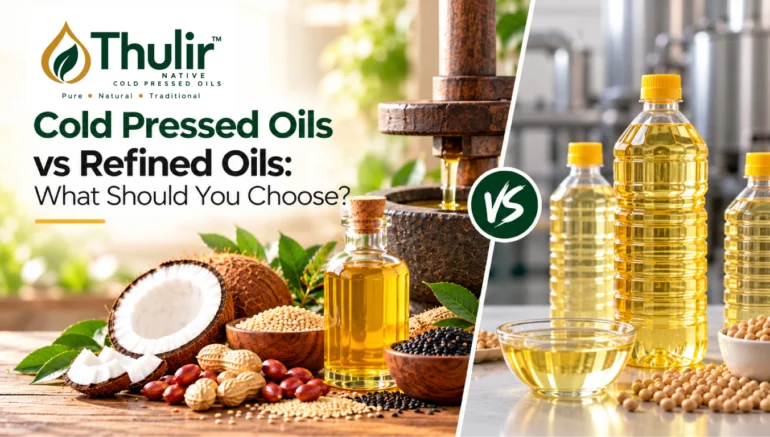
Cold pressed oils are traditionally extracted from oilseeds or fruits using mechanical methods with minimal processing. Refined oils, on the other hand, go through several processing stages to improve appearance, taste, and shelf stability.
Understanding how these oils are made and how they differ can help you make a more informed choice for your kitchen.
What Are Cold Pressed Oils?
Cold pressed oils are extracted using mechanical pressure without relying on high-temperature processing. Traditional extraction methods help retain the natural characteristics of the source ingredient, including its aroma, colour, and flavour.
Common examples include:
- Coconut oil
- Groundnut oil
- Sesame oil
- Castor oil
Each oil has its own unique characteristics and traditional uses.
What Are Refined Oils?
Refined oils undergo additional processing to remove impurities and produce a lighter colour, milder flavour, and more uniform appearance.
Depending on the type of oil and processing method, refining may involve steps such as filtering, bleaching, and deodorising.
Cold Pressed vs Refined Oils
1. Processing Method
Cold pressed oils are extracted mechanically with minimal processing, while refined oils undergo additional processing before reaching consumers.
2. Taste and Aroma
Cold pressed oils generally retain more of the natural flavour and aroma of their source ingredient. Refined oils usually have a more neutral taste and smell.
3. Natural Characteristics
Because cold pressed oils undergo less processing, they retain many of the natural characteristics associated with the original seeds or fruits.
4. Cooking Applications
Different oils are suited to different cooking styles. Groundnut oil can be used for everyday cooking, while coconut and sesame oils are traditionally used in a variety of regional dishes.
How to Choose the Right Oil?
When selecting cooking oil, consider:
Your cooking style: Choose an oil that works well with the foods and cooking methods you regularly use.
Ingredient quality: Look for oils made from carefully selected, good-quality seeds or fruits.
Processing method: Check the label to understand whether the oil is cold pressed, filtered, or refined.
Storage: Store oils properly according to the manufacturer’s recommendations to maintain their quality.
Variety: Using different oils as part of a varied diet can add different flavours and culinary characteristics to your meals.
Why Traditional Oils Still Matter
Traditional oil-making has been part of Indian food culture for generations. Methods passed down through communities focus on careful ingredient selection and mechanical extraction.
Today, cold pressed oils bring this traditional approach into modern kitchens while offering consumers more information about how their cooking oils are produced.
Final Thoughts
There is no single cooking oil that is perfect for every recipe. The best choice depends on your cooking needs, preferences, ingredient quality, and how the oil has been processed.
By understanding the difference between cold pressed and refined oils, you can make a more informed decision when choosing oils for your everyday kitchen.
Choose thoughtfully. Cook traditionally. Enjoy every drop.